Square Stipple Quilt Block Embroidery Review
When I first opened the file for Square Stipple Quilt Block Embroidery, my initial reaction was one of quiet appreciation. In a market often saturated with loud, overly complex motifs or generic geometric shapes, this design stands out because of its restraint and texture. It is not trying to be the loudest thing in the hoop; instead, it aims to provide a sophisticated foundation that elevates whatever it touches. As someone who has spent years evaluating digital assets for commercial production, I look for designs that offer versatility without sacrificing visual integrity. This machine embroidery design delivers exactly that.
The concept of a stipple pattern within a square frame immediately suggests utility. It feels like a modern interpretation of traditional quilting blocks, stripped down to their essential lines and dots. The mood it creates is warm, inviting, and undeniably handmade. It does not scream "machine made" but rather whispers "crafted with care." For designers looking to add depth to a project without overwhelming the subject matter, this is a prime candidate. It serves as an excellent background element, allowing other focal points—like a name, a logo, or a central motif—to take center stage while maintaining a cohesive aesthetic.
Real-World Application: From Digital File to Finished Product
Let me walk you through a scenario where I recently tested this design. I was preparing a custom order for a boutique client who wanted a line of high-end kitchen towels for the holiday season. They needed something that felt rustic yet refined, suitable for both gifting and personal use. My first thought was to use Square Stipple Quilt Block Embroidery as a border treatment. The goal was to create a frame around a monogrammed family name.
I selected a heavy cotton duck fabric for the towels and paired it with a neutral thread color to let the texture of the stitches shine. The result was stunning. The stippling created a soft, shadow-like effect that added dimension without adding bulk. Unlike dense fill stitches that can make fabric stiff and uncomfortable, this design maintained the drape of the towel. When I held the finished product up to the light, the interplay between the white thread and the natural cotton weave gave it a tactile quality that customers love. It felt substantial enough to justify a higher price point, which is crucial for any Etsy seller or small business owner looking to compete in the handmade marketplace.
This same design would translate beautifully to other items in a craft business inventory. Imagine a sweatshirt embroidery project where the stippled square acts as a subtle chest pocket detail, or perhaps a tote bag design where the block frames a brand logo. The versatility extends to baby embroidery projects as well; the soft, rounded nature of the stipple pattern makes it gentle on delicate skin, perfect for a nursery blanket or a onesie. It bridges the gap between functional textile art and decorative embellishment seamlessly.
Where This Design Shines
- Backgrounds and Borders: Its primary strength lies in its ability to act as a filler. It works exceptionally well as an edge-to-edge design on larger garments or home decor items, providing a consistent texture that ties a composition together.
- Commercial Embroidery Projects: For decorators creating branded merchandise, this design offers a professional finish. It looks intentional and polished, which builds trust with buyers who expect high-quality workmanship from their favorite shops.
- Personalized Gifts: Whether it is a wedding gift, a housewarming present, or a holiday stocking, the design adds a layer of sophistication that elevates a simple item into a keepsake.
- Digital Product Previews: If you are selling printable mockups or design assets, this file provides a realistic representation of how texture appears in embroidery, helping clients visualize the final outcome.
Navigating Potential Pitfalls
While the potential is high, no single design is a universal solution. There are specific scenarios where Square Stipple Quilt Block Embroidery requires careful consideration. First, consider the fabric texture. While it performs well on smooth cottons and linens, highly textured fabrics like bouclé or thick fleece might obscure the fine details of the stippling. The dots could get lost in the nap of the material, reducing the intended visual impact.
Stretchy fabrics also present a challenge. Although the design itself is relatively stable, the density of the stitching can cause puckering if the correct stabilizer is not used. On thin fabrics, the weight of the thread and the tension required for the fill areas might distort the material, making the square shape appear uneven. Additionally, on dark fabrics, the contrast needs to be managed carefully. A black stipple pattern on a navy shirt will likely disappear, whereas a light thread on a dark background will pop, but only if the stitch density is sufficient to cover the base fabric completely.
Hoop size is another critical factor. The description mentions sizes ranging from 3.00 inches upward. If you attempt to use the smaller iterations on a curved surface like a cap, the geometry might not lay flat. Curved surfaces require designs that can adapt to the contour, and a rigid square block might pull at the corners if the curvature is too tight. Similarly, for very small applications, such as a tiny embroidered patch or a detail on a buttonhole, the complexity of the stipple pattern might become indistinguishable when stitched at a reduced scale.
Practical Designer Notes for Success
To ensure your finished product meets professional standards, there are several steps I recommend taking before running a full production batch. Always test the design on scrap fabric first. This allows you to observe how the thread interacts with your specific material and whether the stitch density causes any issues. Check thread color contrast thoroughly; sometimes a color that looks good on screen behaves differently under the needle.
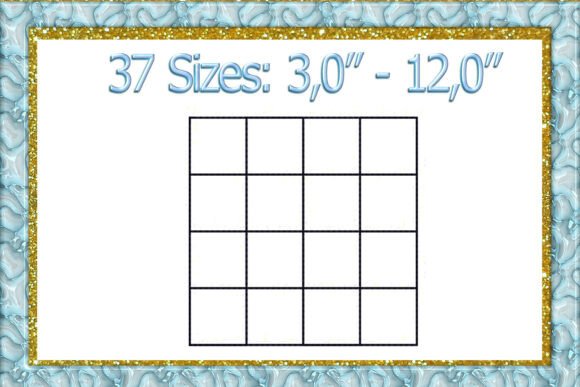
Review the stitch density settings in your digitizing software. If the design feels too sparse, it may lack durability, but if it is too dense, it could damage the fabric or break needles. Confirm your hoop size matches the dimensions of the design, especially since this collection comes in 37 different sizes. Using the wrong hoop can lead to misalignment and wasted time. Inspect small details closely after stitching to ensure no gaps or irregularities have occurred.
It is also wise to test the design in black and white mockups. This helps you assess the value and contrast of the design independent of color distractions. Compare how it looks on light versus dark fabric backgrounds to determine the best color combinations for your target audience. Use proper stabilizer appropriate for the weight of your fabric; this is non-negotiable for maintaining the shape of the square block.
Finally, verify whether the design works for both personal and commercial projects. Licensing terms vary, and understanding these distinctions is vital for anyone running a craft business. Confirm licensing before selling finished items or digital products to avoid legal complications. By following these practical guidelines, you can maximize the value of Square Stipple Quilt Block Embroidery and create products that resonate with customers who appreciate the nuance of true handmade craftsmanship.